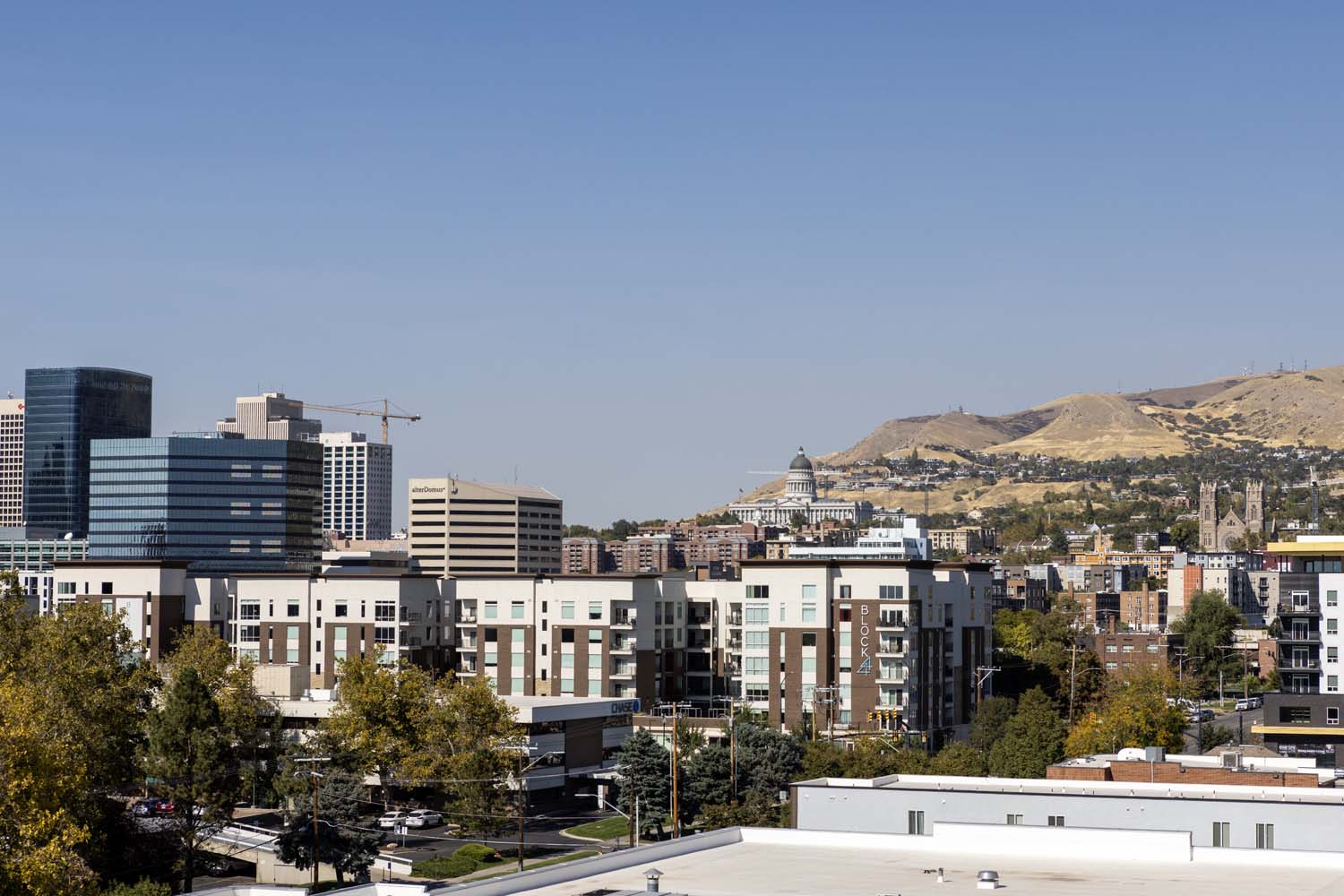
Living in Salt Lake City costs about 9% more than the national average, and housing drives nearly all of that difference, according to RentCafe. For renters, though, the numbers are more favorable than that figure suggests. The average rent in Salt Lake City is about $1,603 a month, below the national average of $1,948 and below both Denver and Boise. Buying is where the city gets pricey: the typical home is valued at about $572,000, roughly 55% above the typical U.S. home.
Whether you’re relocating for work, starting at the University of Utah, or simply looking for a change of scenery, this guide covers what to expect for rent, transportation, taxes, and everyday expenses in Utah’s capital, along with how living downtown can affect your budget.
Salt Lake City Cost of Living at a Glance
These are the figures most people look at first when planning a move to Salt Lake City in 2026.
| Cost | Salt Lake City (2026) |
| Overall cost of living | 9% above U.S. average |
| Average rent (all units) | $1,603/month |
| Average 1-bedroom rent | $1,567/month |
| Typical home value | $572,003 |
| State income tax | 4.45% flat |
| Combined sales tax | 8.45% |
| Grocery sales tax | 3% |
| Average energy bill | About $175/month |
| One-way TRAX fare | $2.50 |
| Median household income | $74,925 |
Each of these is covered in more detail below.
Where Does Your Money Go in Salt Lake City?
Housing is the only category where Salt Lake City runs well above average. Most other costs fall within a few percentage points of the national average, and two come in lower.
| Category | Salt Lake City vs. U.S. average |
| Housing | 25% higher |
| Transportation | 8% higher |
| Groceries | About 6% higher |
| Goods and services | 6% higher |
| Healthcare | 4% lower |
| Utilities | 7% lower |
In practice, your choice of home and how you get around will affect your budget far more than grocery or healthcare prices. Those are also the two costs you have the most control over.
How Much Is Rent in Salt Lake City?
The average Salt Lake City renter pays about $1,603 a month across all unit types, according to Zillow. Broken down by size, Rentometer puts citywide averages at:
| Unit size | Citywide average rent | Starting rent at The Citizen |
| Studio | $1,376 | $1,299 |
| 1 bedroom | $1,567 | $1,675 |
| 2 bedrooms | $2,179 | $2,500 |
| 3 bedrooms | $2,796 | — |
| 4+ bedrooms | $3,347 | — |
Citywide averages include both older buildings and newer construction, so a newer community with in-unit laundry, garage parking, and resort-style amenities will typically rent near or above the average. At The Citizen, studios start below the citywide studio average, and 1- and 2-bedroom homes include hardwood floors, quartz countertops, walk-in closets, and an in-unit washer and dryer, with private balconies available in many homes.
When comparing rents, look beyond the monthly price to what’s included, from appliances and finishes to amenities and location. A slightly higher rent can pay off if it means less time commuting, fewer extra bills, or features you’d otherwise pay for separately.
Is It Cheaper to Rent or Buy in Salt Lake City?
For most people in Salt Lake City, renting is currently the more affordable option.
According to Zillow, the typical Salt Lake City home was valued at about $572,000 in August 2026, up 2.4% from a year earlier. Homes that actually sold went for a median of about $625,000 in July. Meanwhile, average rent sits about 18% below the national average.
Taken together, a typical Salt Lake City home costs about 30 years’ worth of average rent, compared with about 16 years nationally. When home prices are that far ahead of rents, renting typically costs less each month and lets you keep savings that would otherwise go toward a down payment and closing costs.
The market has also cooled somewhat. About a quarter of homes sold above list price this summer, while more than half sold below, so buyers have more negotiating room than they did a few years ago. Many newcomers rent first, spend time in neighborhoods like downtown, Sugar House, and the Avenues, and then decide whether buying makes sense.
Salt Lake City vs. Denver, Boise, and Phoenix: Which Costs More?
Among Mountain West cities, Salt Lake City is one of the more affordable places to rent. Buying costs more than in Denver, Boise, or Phoenix, but average rent is well below Denver and Boise. This table uses Zillow’s figures for every city, from the most recent month published for each.
| City | Typical home value | Average rent | Data through |
| Salt Lake City | $572,003 | $1,603 | Aug. 2026 |
| Denver | $524,695 | $1,881 | Aug. 2026 |
| Boise | $508,258 | $1,808 | June 2026 |
| Phoenix | $410,222 | $1,569 | June 2026 |
| United States | $368,697 | $1,948 | Aug. 2026 |
Coming from Denver, you’d pay about $278 less in rent each month in Salt Lake City, or more than $3,300 a year, while keeping a similar mix of city life and mountain access. Compared with Boise, rent averages about $205 a month less, and you gain a major international airport plus a light rail system. Phoenix rents are only about $35 a month lower than Salt Lake City’s, so the main difference is climate: four seasons and nearby ski resorts versus desert summers.
For buyers, the comparison reverses. Salt Lake City’s typical home value runs about 9% higher than Denver’s, 13% higher than Boise’s, and 39% higher than Phoenix’s.
What Does a Month of Downtown Living Cost?
Rent is only one part of a monthly budget. Transportation can change your monthly costs by more than $1,000. The table below compares at a 1-bedroom at The Citizen with and without a car, using our published rates, our fee guide, AAA’s 2026 Your Driving Costs study, and UTA’s fare caps.
| Monthly cost | With a car | Car-free with TRAX |
| 1-bedroom starting rent | $1,675 | $1,675 |
| Required monthly fees (internet and smart home, valet trash, billing admin) | $160.50 | $160.50 |
| Owning and operating a new car (AAA average) | $1,072 | — |
| Unreserved garage parking | $100 | — |
| UTA transit (maximum with FAREPAY fare capping) | — | About $87 |
| Estimated total | About $3,008 | About $1,923 |
These estimates don’t include variable utilities, groceries, or renter’s insurance, and your actual car costs will depend on what you drive. Even so, the comparison shows how much flexibility downtown living offers. Residents can drive less, share one car, or go without a car payment altogether.
At The Citizen, that’s a practical option. The Library and Trolley TRAX stations are both a short walk away, and the Red Line runs directly to the University of Utah. Single rides cost $2.50, FAREPAY cards cap your fares at $5 a day and $20 a week, and part of downtown is a Free Fare Zone where short trips cost nothing. U of U students may also qualify for a pass through the university’s transit program. Learn more in our guide to apartments near the University of Utah.
If you keep a car, budget for fluctuating fuel prices. Utah’s average gas price topped $4.60 a gallon in mid-May 2026, according to AAA.
Taxes, Utilities, and Groceries in Salt Lake City
Everyday costs in Utah are fairly predictable, and several are moving in residents’ favor.
Income tax: Utah charges a single flat income tax rate, which dropped to 4.45% for 2026, retroactive to January 1. That marks the sixth straight year lawmakers have cut the rate.
Sales tax: The combined rate in Salt Lake City is 8.45%, made up of 4.85% state, 2.6% county, and 1% city tax. Groceries for home consumption are taxed at a reduced 3% rate, which helps offset grocery prices that run slightly above the national average. You can look up official rates through the Utah State Tax Commission.
Utilities: Salt Lake City utilities cost about 7% less than the national average, with energy bills averaging roughly $175 a month, per RentCafe. Rocky Mountain Power provides electricity, and Enbridge Gas Utah, which took over from Dominion Energy Utah, provides natural gas. Expect heating costs to peak from December through February. At The Citizen, internet is included in the monthly communications fee, so there’s no separate account to set up.
Groceries and errands: Smith’s is just a few blocks from The Citizen, and Trader Joe’s, Whole Foods, and Harmons are a short drive or TRAX ride away. City Creek Center and Trolley Square offer additional shopping.
How Much Do You Need to Earn to Live in Salt Lake City?
Based on the common guideline of spending no more than 30% of gross income on rent, the table below shows the annual income needed for an average Salt Lake City apartment.
| Unit size | Average rent | Income needed (30% rule) |
| Studio | $1,376 | About $55,000 |
| 1 bedroom | $1,567 | About $63,000 |
| 2 bedrooms | $2,179 | About $87,000 |
For context, Salt Lake City’s median household income is about $74,925, according to U.S. Census Bureau QuickFacts. A household earning the median income can comfortably afford an average studio or 1-bedroom, while a 2-bedroom is often more manageable with roommates or two incomes.
What Do You Get for Living in Salt Lake City?
Beyond the numbers, much of Salt Lake City’s value comes from how much is within easy reach.
From downtown, you’re about 2 miles (roughly 7 minutes) from the University of Utah and about 6.6 miles (roughly 10 minutes) from Salt Lake City International Airport. University of Utah Hospital and Intermountain Health’s LDS Hospital anchor the area’s healthcare and employment base, and TRAX connects you to downtown offices in minutes.
Outdoor recreation is close by as well. Brighton, Solitude, Snowbird, and Alta sit up Big and Little Cottonwood Canyons, typically 35 to 45 minutes away, and UTA ski service runs up both canyons in winter. Park City is usually a 35- to 40-minute drive. In the warmer months, Memory Grove and City Creek Canyon offer trails just north of downtown, Liberty Park and Washington Square bring green space close to home, and Red Butte Garden hosts a popular summer concert series near campus. Downtown also offers Jazz games, performances at Eccles Theater, and a wide range of restaurants within walking distance.
Pros and Cons of Living in Salt Lake City
| Pros | Cons |
| Renter-friendly prices: Average rent runs about 18% below the national average and below Denver and Boise. | Expensive to buy: Typical home values sit about 55% above the national level. |
| Lower utility and healthcare costs: Both come in below the national average. | Winter inversions: Cold air can trap pollution in the valley, causing poor air-quality days. |
| Falling income tax: Utah has cut its flat rate six years running, to 4.45% in 2026. | Slightly higher everyday prices: Groceries, goods, and transportation run a few points above average. |
| Transit that works: TRAX, buses, and FrontRunner connect downtown with the airport, the U, and communities from Ogden to Provo. | Volatile gas prices: Utah fuel prices swung sharply in 2026, which hits car-dependent households hardest. |
| Mountains next door: Major ski resorts and trailheads are less than an hour from downtown. | Rising demand downtown: Newer buildings with premium amenities often rent above citywide averages. |
For people who value city living, outdoor recreation, and a manageable monthly rent, Salt Lake City offers a strong balance of lifestyle and cost.
Planning Your Move to The Citizen
If you’re considering The Citizen, these are the costs to plan for at move-in.
| Move-in cost | Amount |
| Application fee | $50 per applicant |
| Administrative fee | $300 |
| Refundable security deposit | Starting at $500, based on approved credit |
| Utility new account fee | $15 |
After that, plan for required monthly charges of $130 for internet and smart-home technology, $25 for valet trash, and a $5.50 utility billing admin fee, plus variable charges for water, sewer, trash, and common area utilities. A $20 renter’s legal liability charge applies only if you don’t provide your own renter’s insurance. Optional extras include garage parking ($100–$200 a month), storage ($25–$100 a month), and pet rent ($50 per pet).
With flexible 6- to 18-month leases, a resort-style pool and hot tub, a rooftop lounge, and a fitness center with floor-to-ceiling windows, The Citizen offers convenient access to everything downtown has to offer.
Frequently Asked Questions
What is the cost of living in Salt Lake City in 2026?
Salt Lake City’s cost of living is about 9% above the national average, according to RentCafe, mainly because of housing. The typical home is valued at about $572,000, and average rent is about $1,603 a month. Utilities and healthcare cost less than the national average, while groceries and transportation cost slightly more.
What is the average rent in Salt Lake City in 2026?
Average rent in Salt Lake City ranges from about $1,376 for a studio to $3,347 for a 4+ bedroom home, according to Rentometer. A 1-bedroom averages about $1,567, and a 2-bedroom averages about $2,179.
How much do you need to make to live in Salt Lake City?
Most renters need to earn about $63,000 a year to comfortably rent an average 1-bedroom in Salt Lake City, based on spending no more than 30% of gross income on rent. An average studio requires about $55,000, and an average 2-bedroom requires about $87,000. Salt Lake City’s median household income is about $74,925, according to U.S. Census data.
Is Salt Lake City cheaper than Denver?
Salt Lake City is cheaper than Denver to rent in, but more expensive to buy in. Average rent in Salt Lake City is about $1,603 a month, compared with about $1,881 in Denver. However, the typical Salt Lake City home is valued at about $572,000, versus about $525,000 in Denver, according to Zillow.
Is it cheaper to rent or buy in Salt Lake City?
Renting is generally cheaper in Salt Lake City right now. A typical home costs about 30 years of average rent, compared with about 16 years nationally, so monthly rent usually comes in well below the cost of owning a comparable home.
Can you live in Salt Lake City without a car?
Yes, many downtown residents live comfortably without a car. TRAX light rail and UTA buses connect downtown with the University of Utah, the airport, and communities across the valley. Fares are $2.50 per ride, and FAREPAY cards cap costs at $5 a day and $20 a week.
Are utilities included in rent at The Citizen?
No, utilities are billed separately from base rent. Required monthly charges include a $130 communications fee covering internet and smart-home technology, $25 for valet trash, and a $5.50 utility billing admin fee, plus variable charges for water, sewer, trash, and common area utilities. See our FAQs page for current details.
What does it cost to move into The Citizen?
Required move-in costs at The Citizen include a $50 application fee per applicant, a $300 administrative fee, a refundable security deposit starting at $500 based on approved credit, and a $15 utility new account fee. Pet deposits and fees apply if you have pets.
Sources
- Cost of living index, energy bills, and category comparisons: RentCafe Cost of Living Calculator – Salt Lake City
- Home values and average rents: Zillow for Salt Lake City, Denver, Boise, Phoenix, and the United States
- Rent by bedroom count: Rentometer – Salt Lake City
- Median household income: U.S. Census Bureau QuickFacts – Salt Lake City
- Income tax: EY Tax News, KSL
- Sales and grocery tax: Avalara, Sovos, Utah State Tax Commission
- Utilities: Rocky Mountain Power, KUTV
- Vehicle and fuel costs: AAA Your Driving Costs 2026 (via Kelley Blue Book), AAA Utah gas prices
- Transit fares: UTA Current Fares, UTA Free Fare Zone
- The Citizen pricing and fees: Floor Plans, Fee Guide, Amenities